Chicken Thigh Nutrition: Calories, Macros, Vitamins & Comparisons (Complete Guide)
Complete chicken thigh nutrition guide: calories, macros, vitamins, and USDA data for every preparation style. We compare skinless vs skin-on, 100g vs 4oz vs 6oz servings, and grilled vs fried vs baked — so you can track and cook confidently.

Chicken thighs have always had the slightly unfair reputation of being the "less healthy" chicken cut more fat than breast, darker meat, and therefore suspect in a diet-culture world that equated low fat with healthy. In reality, more complicated, and for a lot of people, chicken thighs are actually the better choice: more flavorful, genuinely harder to overcook, more affordable, and with a nutritional profile that holds up well against the lean-but-dry breast.
This complete guide breaks down everything calories per serving size, macros, vitamins, the skin-on versus skinless difference, how cooking method affects the numbers, and how chicken thighs compare to chicken breast for specific dietary goals.
Understanding the Dark Meat Difference
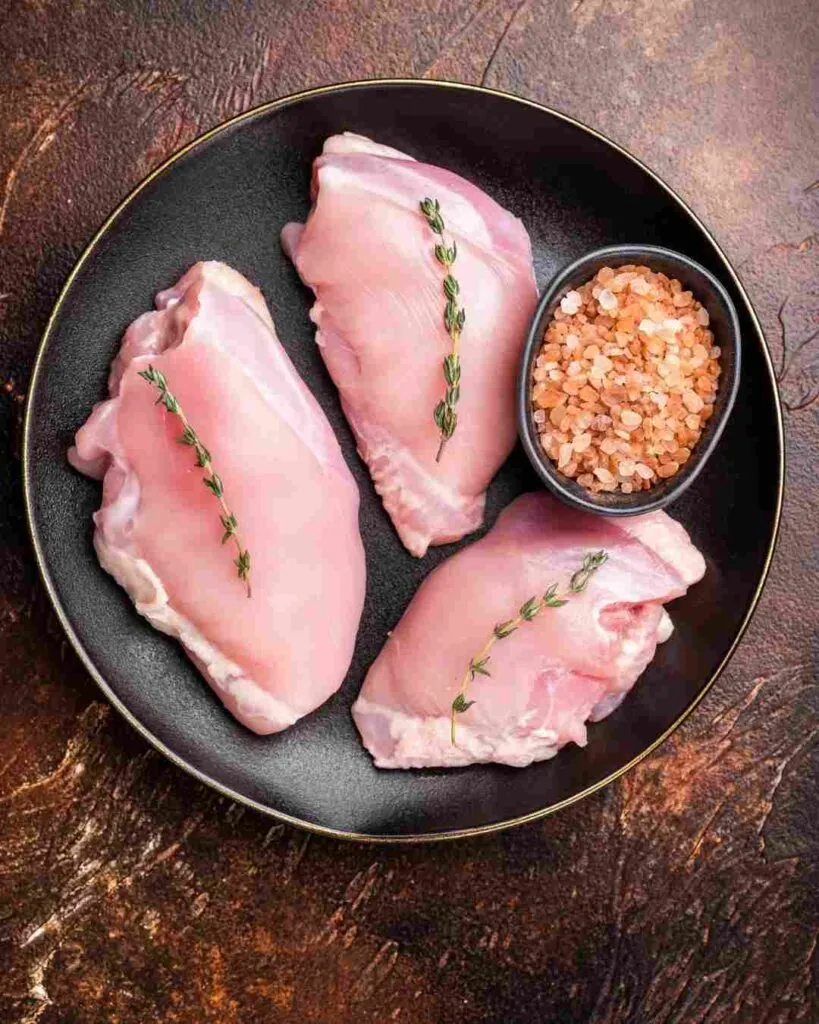
Chicken thighs are classified as "dark meat" because the leg muscles contain more myoglobin the oxygen-carrying protein that gives dark meat its color and contributes to its higher fat content. Chickens use their legs constantly, so thigh muscles are well-developed, richly vascularized, and contain more intramuscular fat than breast muscles.
This translates to: richer flavor, more tender texture that survives longer cooking times without drying out, slightly higher fat and calorie content per gram, and better iron and zinc content than white meat.
Chicken Thigh Nutrition Facts (USDA Data)
Skinless, boneless chicken thigh cooked, roasted (per 100g):
- Calories: ~179 kcal
- Protein: ~26g
- Total fat: ~8g (mostly unsaturated)
- Saturated fat: ~2.2g
- Carbohydrates: 0g
- Cholesterol: ~95mg
- Iron: ~1.4mg (~8% DV)
- Zinc: ~2.8mg (~25% DV)
- B12: ~0.7mcg (~29% DV)
- Niacin (B3): ~5.5mg (~34% DV)
Nutrition by Serving Size
- 1 oz (28g) skinless cooked: ~50 kcal, 7.3g protein, 2.2g fat
- 3 oz (85g) skinless cooked: ~152 kcal, 22g protein, 6.8g fat
- 4 oz (113g) skinless cooked: ~202 kcal, 29g protein, 9g fat
- 6 oz (170g) skinless cooked: ~304 kcal, 44g protein, 13.6g fat
- One average skinless thigh (~109g): ~195 kcal, 28g protein, 8.7g fat
Skin-On vs. Skinless: The Practical Difference
Leaving the skin on adds significantly to fat and calorie content. Per 100g cooked skin-on chicken thigh:
- Calories: ~229 kcal (vs ~179 skinless) roughly 28% more
- Total fat: ~15.5g (vs ~8g skinless)
- Saturated fat: ~4.3g (vs ~2.2g skinless)
- Protein: ~25g slightly less than skinless per 100g because skin displaces protein-rich meat
Cooking with the skin on and removing before eating: a common approach that balances juiciness with lower final fat intake. The skin retains moisture during cooking without you consuming all the extra fat.
How Cooking Method Changes the Numbers
| Nutrient | Skin-On, Bone-In (Edible portion) | Boneless, Skinless |
| Calories | ~220 kcal | ~120 kcal |
| Protein | 16.5g | 20g |
| Total Fat | 16g | 4g |
| Saturated Fat | 4.5g | 1g |
| Monounsaturated Fat | 6.5g | 1.5g |
| Carbohydrates | 0g | 0g |
| Iron | 0.9 mg | 0.9 mg |
| Zinc | 1.6 mg | 2.0 mg |
- Grilled or baked (skinless): Lowest calories (~175–195 kcal/100g), no added fat if cooked without oil
- Pan-seared with minimal oil: Adds ~30–50 kcal per serving from cooking oil
- Breaded and baked: Adds carbohydrates and calories from breading (~250–300 kcal/100g)
- Deep fried (KFC/restaurant style): Dramatically higher typically 300–400+ kcal per piece depending on breading thickness and oil absorption
- Air fried: Close to oven-baked results with improved crispiness excellent option for lower-fat cooking
Chicken Thigh vs. Chicken Breast
- Protein: Breast slightly ahead at ~31g/100g cooked vs ~26g for thigh but difference is small
- Fat: Breast significantly lower at ~3.6g/100g vs ~8g for thigh (skinless, cooked)
- Calories: Breast lower at ~165 kcal/100g vs ~179 kcal for thigh
- Iron and zinc: Thigh wins dark meat has meaningfully more of both
- Flavor and moisture tolerance: Thigh wins substantially forgiving in the oven, better in slow cooker, superior in soups and stews
- Cost: Thighs typically 30–50% cheaper per pound than breasts
Bottom line for choosing: If you are strictly minimizing fat and calories, breast wins. If you are cooking for flavor, moisture, iron intake, or budget thighs are the better practical choice. Nutritionally, the difference isn't dramatic enough to make thighs a problem for any reasonable diet.
Eat Healthy, Live Well