How to Fall Asleep Fast: 36 Proven Tricks for Kids, Teens & Adults (Backed by Science)
Proven techniques to fall asleep faster — from the military 2-minute method to 4-7-8 breathing, cognitive shuffling, ADHD strategies, anxiety-specific tricks, and kid-friendly routines. Start with one or two tonight and build from there.

You are lying in bed, it's been 45 minutes, and your brain is still running through every awkward thing you said in 2019. Sound familiar? Difficulty falling asleep isn't a character flaw it's a physiological problem with physiological solutions.
The sleep science on this is actually pretty clear: falling asleep faster is a learnable skill. The techniques below are used by Navy SEALs, anxiety researchers, pediatric sleep specialists, and cognitive behavioral therapists. Pick one or two that fit your situation and try them consistently for a week.
Immediate Techniques That Work Tonight

Breathing Methods
Box Breathing (4-4-4-4): Inhale for 4 seconds → Hold for 4 → Exhale for 4 → Hold for 4. Repeat 4–6 cycles. This pattern is used by Navy SEALs and first responders to reduce acute stress quickly it works for sleep too because it directly activates the parasympathetic nervous system.
Diaphragmatic (Belly) Breathing: Place one hand on your stomach. Breathe in deeply enough that your stomach rises more than your chest. Exhale fully and slowly. Belly breathing activates the "rest and digest" response almost immediately the opposite of the fight-or-flight state that keeps you awake.
Environment Quick Fixes
Light: Stop all screens (phone, TV, laptop) at least 90 minutes before bed. Blue light suppresses melatonin production the hormone that tells your brain it's time to sleep. Even dimming your phone screen down to minimum brightness helps more than you'd expect.
Temperature: Your bedroom should be 60–67°F (15.6–19.4°C). A cooler room mimics the natural drop in core body temperature that the body uses as a signal to initiate sleep.
The Warm Shower Hack
Take a warm shower or bath 60–90 minutes before bed. When you step out into a cooler room, your body temperature drops rapidly which paradoxically accelerates sleep onset by mimicking the natural cooling signal. This is one of the most consistently effective tricks in the sleep research literature.
Mental Techniques for Racing Thoughts
Cognitive Shuffling: Pick a neutral word (like "pillow"). For each letter, slowly visualize random, unrelated objects P for penguin, I for iron, L for lantern, and so on. Keep the images meaningless and unconnected. This works because it prevents your brain from constructing a narrative or accessing worry loops.
The Alphabet Word Game: Go through the alphabet and silently assign a boring, unrelated word to each letter. The deliberate meaninglessness bores your conscious mind into releasing its grip.
The Military Sleep Method (2 Minutes)

Developed for U.S. Navy pilots who needed to sleep in high-stress conditions, this method reportedly helps about 96% of people fall asleep within 2 minutes after 6 weeks of consistent practice. It combines progressive muscle relaxation with mental clearing.
The Sequence:
- Face (10 seconds): Close your eyes. Let your forehead, cheeks, jaw, and tongue go completely soft. If your jaw wants to hang open, let it.
- Shoulders and arms (30 seconds): Let your shoulders drop. Release tension down through your upper arms, forearms, and hands one side at a time. Feel the weight of each arm against the mattress.
- Chest and legs (10 seconds): Take a slow, full exhale. Let your chest relax. Then release your thighs, calves, and feet one section at a time.
- Clear your mind (60 seconds): Pick one of these: (a) imagine lying in a canoe on a still lake under a clear sky, (b) picture yourself in a dark velvet hammock in a completely quiet room, or (c) simply repeat "don't think" silently every few seconds. The goal is to prevent your brain from starting any story or conversation.
Quick 30-second version: Three cycles of 4-7-8 breathing → force-relax face and drop shoulders → focus on a single static, boring image (a black void works fine).
The key with this method is practice. Most people don't see dramatic results the first few nights 4–6 weeks of nightly practice is when it becomes reliably fast.
Time-Based Protocols
The 4-7-8 Breathing Method
Developed by Dr. Andrew Weil. Do 4 full cycles:
- Exhale completely through your mouth (make a whoosh sound)
- Inhale quietly through your nose for 4 seconds
- Hold your breath for 7 seconds
- Exhale completely through your mouth for 8 seconds (whoosh)
This lengthened exhale activates the vagal brake a nerve that slows heart rate and induces deep relaxation. Many people feel noticeably calmer after just two cycles.
The 15-Minute CBT Rule
This is actually the gold-standard clinical recommendation. If you are not asleep within 15 minutes, get out of bed. Do something genuinely calm and boring in dim light read a physical book, fold laundry, listen to quiet music. Return to bed only when you feel sleepy.
The reason: lying awake in bed for extended periods trains your brain to associate your bed with wakefulness and frustration. Breaking that association is one of the most powerful long-term fixes.
The 10-5-3-2-1 Evening Countdown
- 10 hours before bed: Last caffeine intake
- 5 hours before bed: No heavy meals
- 3 hours before bed: No intense work or stressful tasks
- 2 hours before bed: All screens off
- 1 hour before bed: Start your wind-down routine (shower, reading, light stretching)
Structure like this primes your nervous system for sleep hours before you actually get in bed.
ADHD-Friendly Sleep Strategies
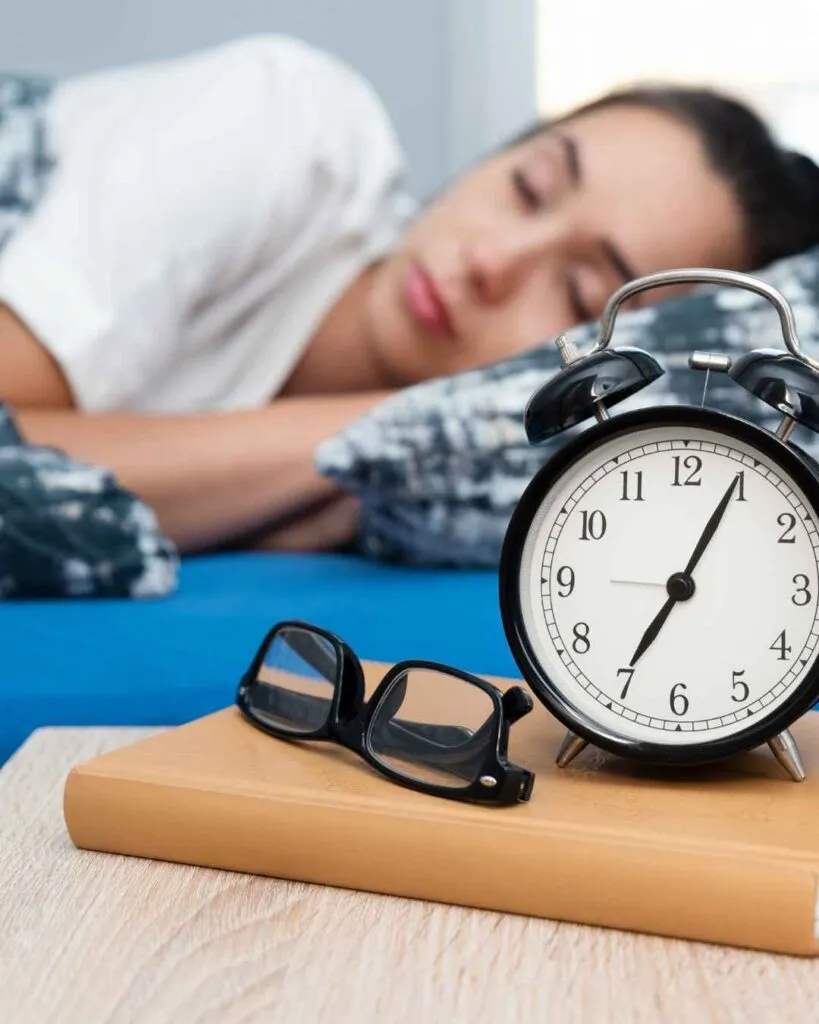
ADHD creates specific sleep challenges: hyperactive thoughts that won't quiet, physical restlessness, difficulty transitioning out of "doing mode." Standard advice often doesn't work as well. These adaptations tend to be more effective:
- Weighted blanket: Deep pressure from a weighted blanket (typically 10% of body weight) calms sensory overload, increases serotonin, and promotes melatonin release. Many people with ADHD report falling asleep 30–60 minutes faster with one.
- Two-step routine only: Complex multi-step bedtime checklists tend to backfire for ADHD brains. Keep it to two predictable actions (brush teeth → read 5 pages, for example). Consistent and simple wins.
- White or brown noise: Constant background sound gives hyperactive attention something to anchor to without overstimulating. Brown noise (lower frequency than white noise) is often particularly effective.
- Brain dump notebook: Keep a notepad by the bed. When thoughts start racing, write them down immediately. This tells your brain the thought has been "captured" and doesn't need to keep generating it to prevent you from forgetting.
How to Fall Asleep When Anxious
Anxiety and sleep have a particularly vicious cycle: anxiety makes sleep hard, sleep deprivation worsens anxiety. Breaking in at the body level (breathing) tends to work better than trying to think your way out of anxious thoughts.
- 5-4-3-2-1 Grounding: Name 5 things you can see, 4 you can feel (texture of sheets, temperature), 3 you can hear, 2 you can smell, 1 you can taste. This pulls attention back to the present moment and interrupts anxiety loops very effectively.
- 4-7-8 Breathing: The extended exhale slows heart rate physiologically, regardless of what your mind is doing.
- Worry dump before bed: Write down your top worries 2–3 hours before sleep not in bed. The act of writing them down closes the mental tab. Your brain stops generating them because they are "stored."
- Gentle stretching: Five minutes of child's pose, legs-up-the-wall, or hip flexor stretching releases physical tension that often sits in the neck, shoulders, and hips after a stressful day.
Sleep Tips for Kids (Ages 7–12)
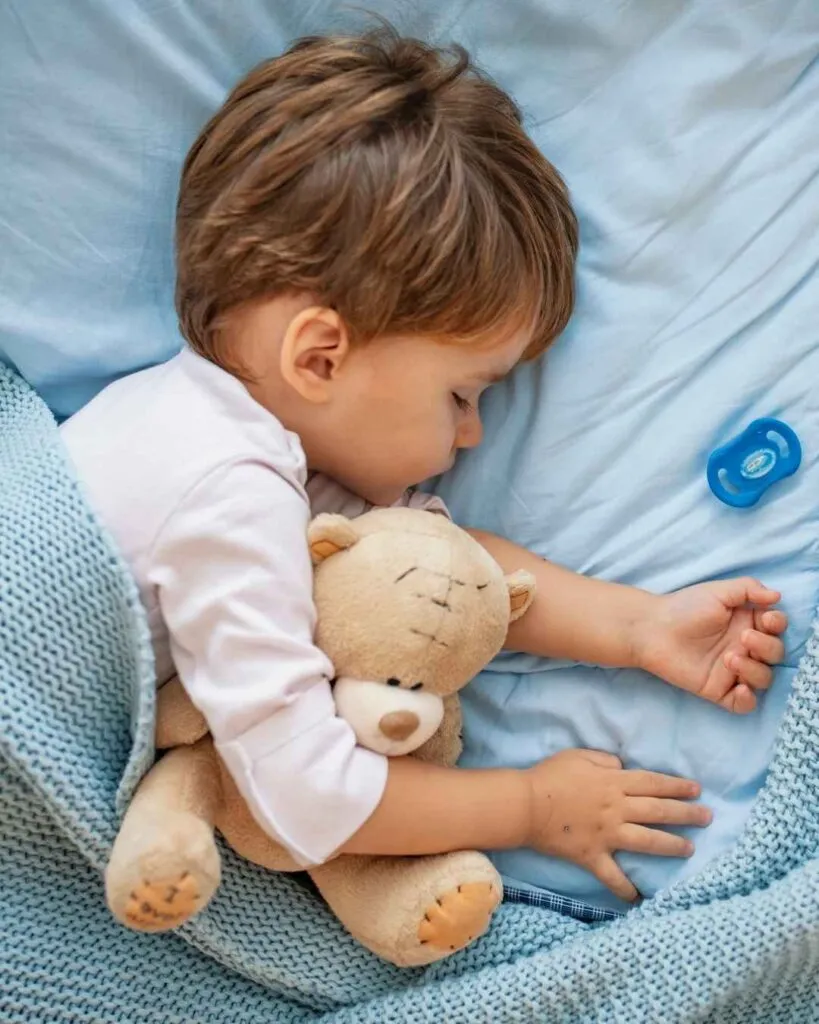
- Teddy Bear Breathing: Place a stuffed animal on their belly. Have them breathe in slowly enough to watch it rise, then out to watch it fall. This teaches diaphragmatic breathing in a format kids actually enjoy.
- 60-Minute Wind-Down Routine: 30 minutes of calm play → 20 minutes of hygiene → 10 minutes of storytime or quiet conversation. No screens in the final hour non-negotiable for consistent sleep onset.
- Consistent Wake Time: Even on weekends. The wake time anchors the circadian rhythm more reliably than bedtime does.
- Devices Out of the Bedroom: Charge phones, tablets, and gaming devices outside the bedroom. Remove the temptation before it becomes a problem.
When You Still Can't Sleep: Troubleshooting
Problem: Not tired enough when you get in bed
Avoid long afternoon naps, increase physical activity during the day, and follow the 15-minute rule (get out of bed if not asleep in 15 minutes).
Problem: Brain won't stop
Try counting backward by 3s from 300 it's just complex enough to require conscious focus, crowding out other thoughts. Cognitive shuffling also works well here.
Problem: Waking up repeatedly during the night
Check room temperature (likely too warm) and light exposure. If you are awake more than 5 minutes, get up briefly rather than lying there frustrated.
What This Means for You
Faster sleep onset is achievable for almost anyone with the right tools and a bit of patience. Start with one technique tonight box breathing and a cooler room is a solid starting point. Add the Military Method or the 10-5-3-2-1 countdown once the first becomes habitual.
The science is consistent: controlling light, temperature, breathing pattern, and mental focus are the fastest paths to sleep. What takes practice becomes automatic within a few weeks. The goal isn't perfection it's gradual improvement that compounds into genuinely better sleep.