Is Chipotle Healthy? (2025 MD-Reviewed Nutrition Guide)
Chipotle can be genuinely healthy or surprisingly calorie-heavy depending entirely on how you order. The platform is excellent — real proteins, fresh vegetables, full customization. The traps are real too — sodium across every ingredient, large default portions, and deceptively heavy toppings. Here's how to order smart.
Chipotle has become the go-to answer when someone asks "what fast food can I actually eat without feeling terrible about it?" And to a significant extent, that reputation is earned. The ingredients are real, the proteins are recognizable, and the customization is genuinely better than most quick-service competitors.
But Chipotle also has traps that are easy to fall into, and they are significant enough that the same menu can produce either a 400-calorie muscle-building meal or a 1,500-calorie sodium bomb depending entirely on what you order. Here's the honest breakdown.
What Chipotle Actually Gets Right
-
Real, whole-food proteins
Chipotle grills actual cuts of chicken, steak, and pork rather than reformed, heavily seasoned patties. Sofritas is braised tofu. These are recognizable ingredients, not food-product approximations. -
Complete customization
You control every element of your meal. Skip the rice, double the vegetables, hold the sour cream, ask for less cheese. This level of control doesn't exist at most fast-food chains. -
High protein delivery
Getting 40–80g of protein in a single meal is straightforward at Chipotle. High protein supports satiety, muscle maintenance, and helps offset the meal's calorie density by keeping you full longer. -
Genuine fiber potential
Black beans, pinto beans, fajita vegetables, and salad greens can easily provide 15–20g of fiber per bowl excellent for digestion, cholesterol, and blood glucose management.
Where Chipotle Gets Complicated
Sodium The Biggest Concern
This is Chipotle's most consistent clinical problem. Nearly every ingredient carries substantial salt:
- Grilled chicken: ~310 mg sodium per serving
- Steak: ~330 mg per serving
- Flour tortilla (burrito): ~690 mg
- Sofritas: ~560 mg per serving
- Black beans, rice, salsa, cheese all adding more
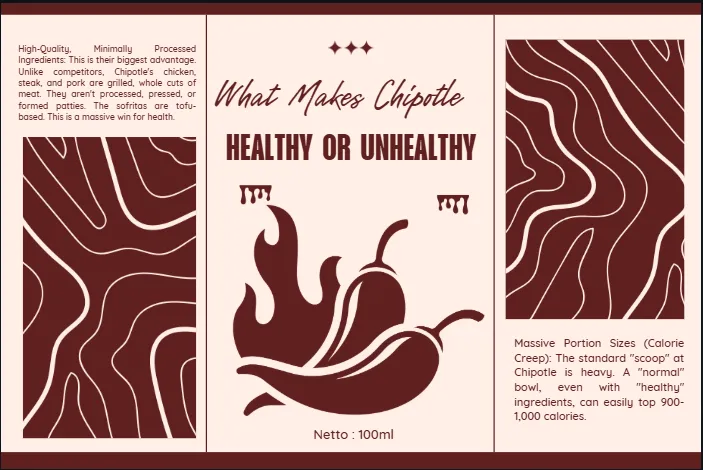
Building a full meal under 1,200 mg sodium is genuinely challenging. A typical Chipotle order easily reaches 2,800–3,000 mg well above the American Heart Association's 2,300 mg daily maximum and double the 1,500 mg target for people with hypertension.
Default Portion Sizes Are Large
Rice portions are often heavier than the nominal 4 oz (~210 calories). Protein scoops are generous. Even a "balanced" bowl can surpass 900–1,000 calories without chips, queso, or sour cream.
The Calorie Traps
- Flour tortilla (burrito): ~320 calories, 690 mg sodium
- Queso Blanco: ~120 calories, 500 mg sodium
- Sour cream: ~110 calories
- Vinaigrette: ~270 calories (mostly oil)
- Chips + queso: ~1,270 calories, 1,260 mg sodium equivalent to a full additional meal
Menu Format Comparison
How to Order for Specific Goals
For Weight Loss (~400 calories, ~40g protein)
Salad base + grilled chicken + extra fajita vegetables + modest black beans + fresh salsa. Skip rice, tortilla, queso, and sour cream. Light on cheese.
For Blood Sugar Control
No rice, no tortilla. Bowl or salad with steak or chicken, black beans, lots of fajita vegetables, lettuce, and guacamole. Guacamole's monounsaturated fats slow carbohydrate absorption. Skip the high-glycemic toppings.
For Muscle Building
Double protein (chicken + steak if available, or just double a single protein). White rice for carbohydrates. Black beans. Skip processed toppings. Aim for 60–80g protein per meal on training days.
For Reducing Sodium
Order a bowl (skip the tortilla biggest sodium single item). Go light on cheese. Choose fresh salsa over corn salsa. Skip the vinaigrette. Ask for less protein seasoning if the option is available.
What This Means for You
Chipotle is one of the better fast-food options available when you order thoughtfully. The platform gives you real control over a mostly whole-food meal. The risk is real too: default orders can easily become 1,500-calorie, 3,000 mg sodium meals that work against health goals rather than supporting them.
The formula for a genuinely healthy Chipotle meal is straightforward: salad base or bowl (no tortilla), lean protein, loads of vegetables, beans for fiber, a light salsa, and skip the queso, sour cream, and vinaigrette. Everything else is negotiable, but that core structure is what separates the 400-calorie version from the 1,500-calorie version.